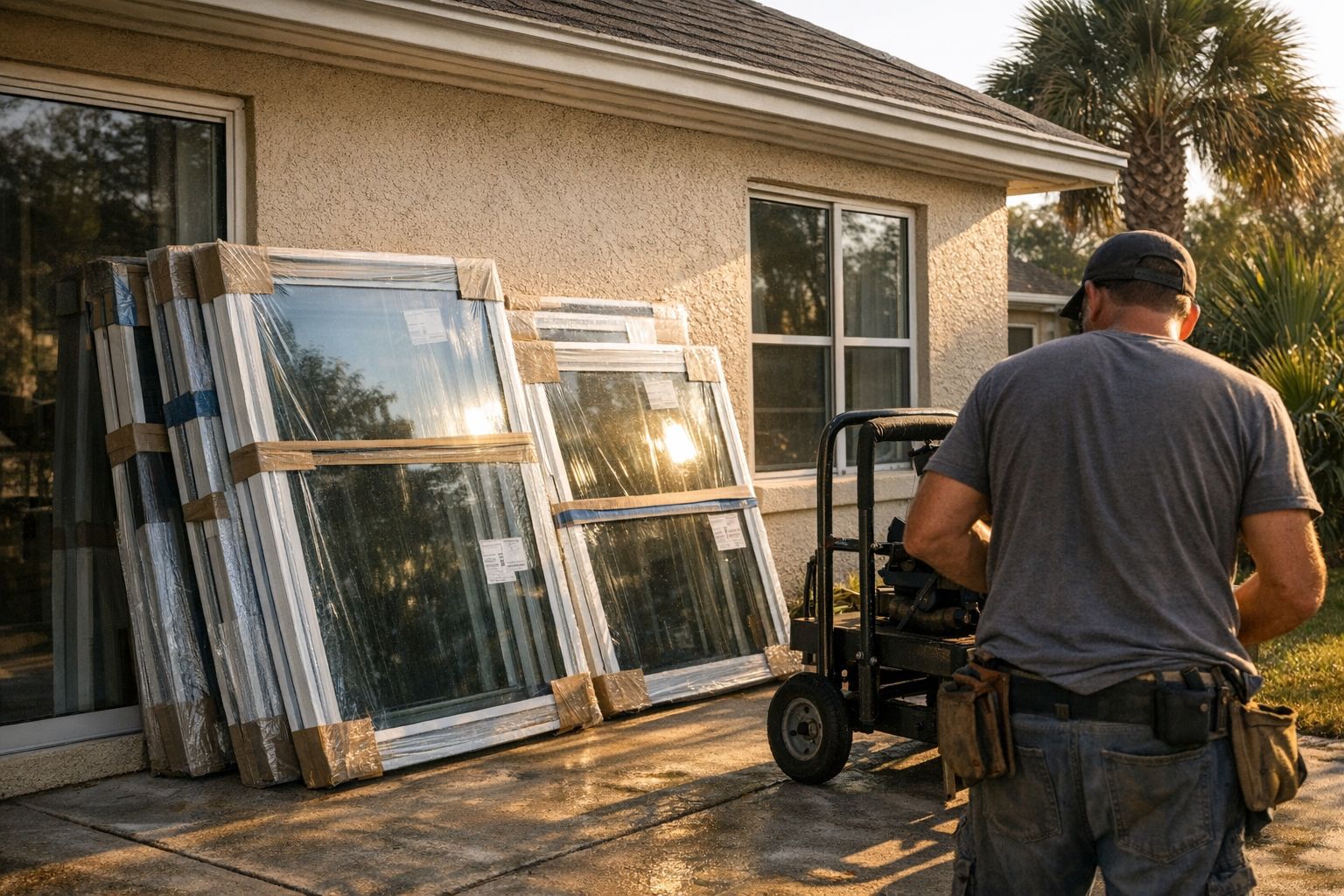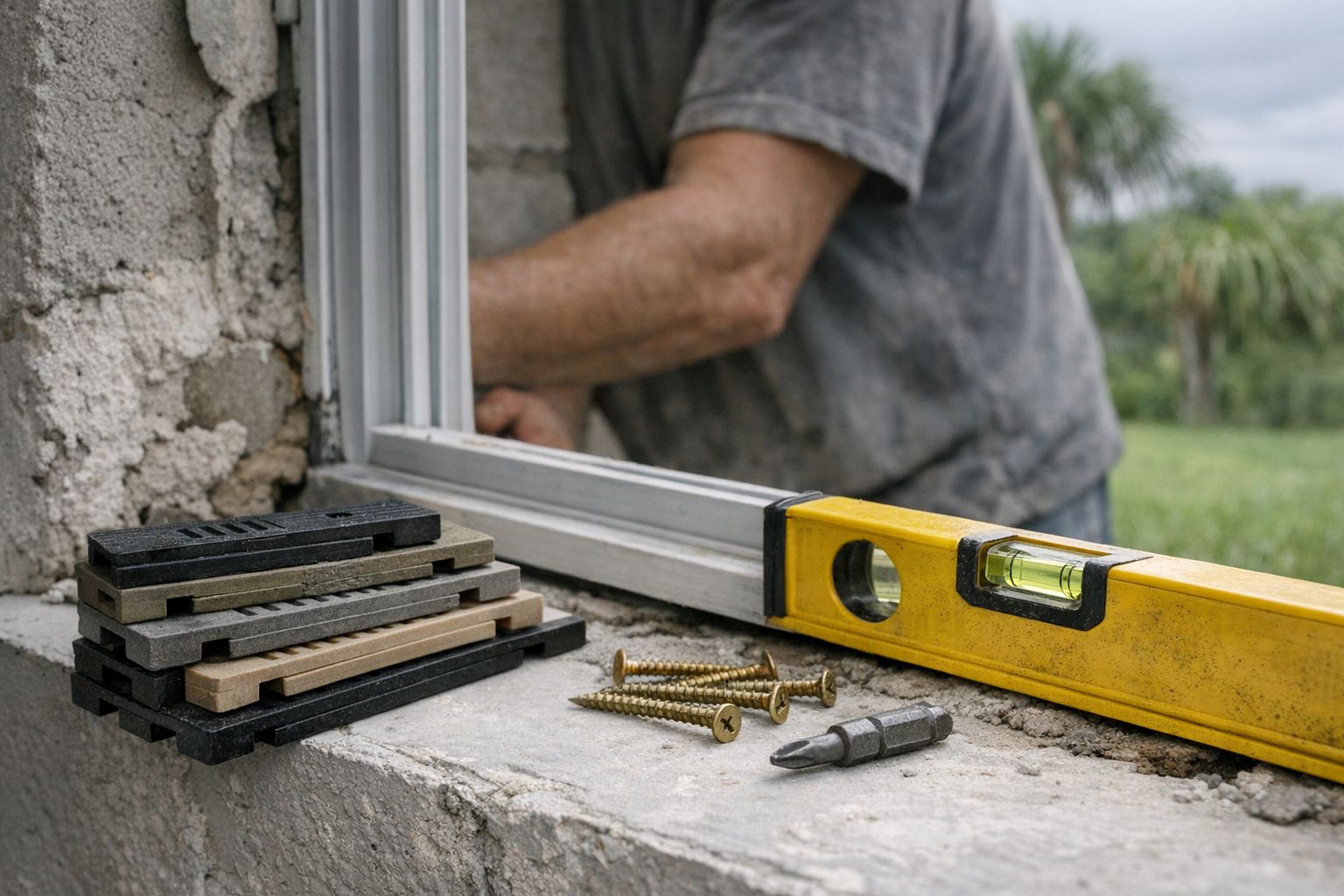
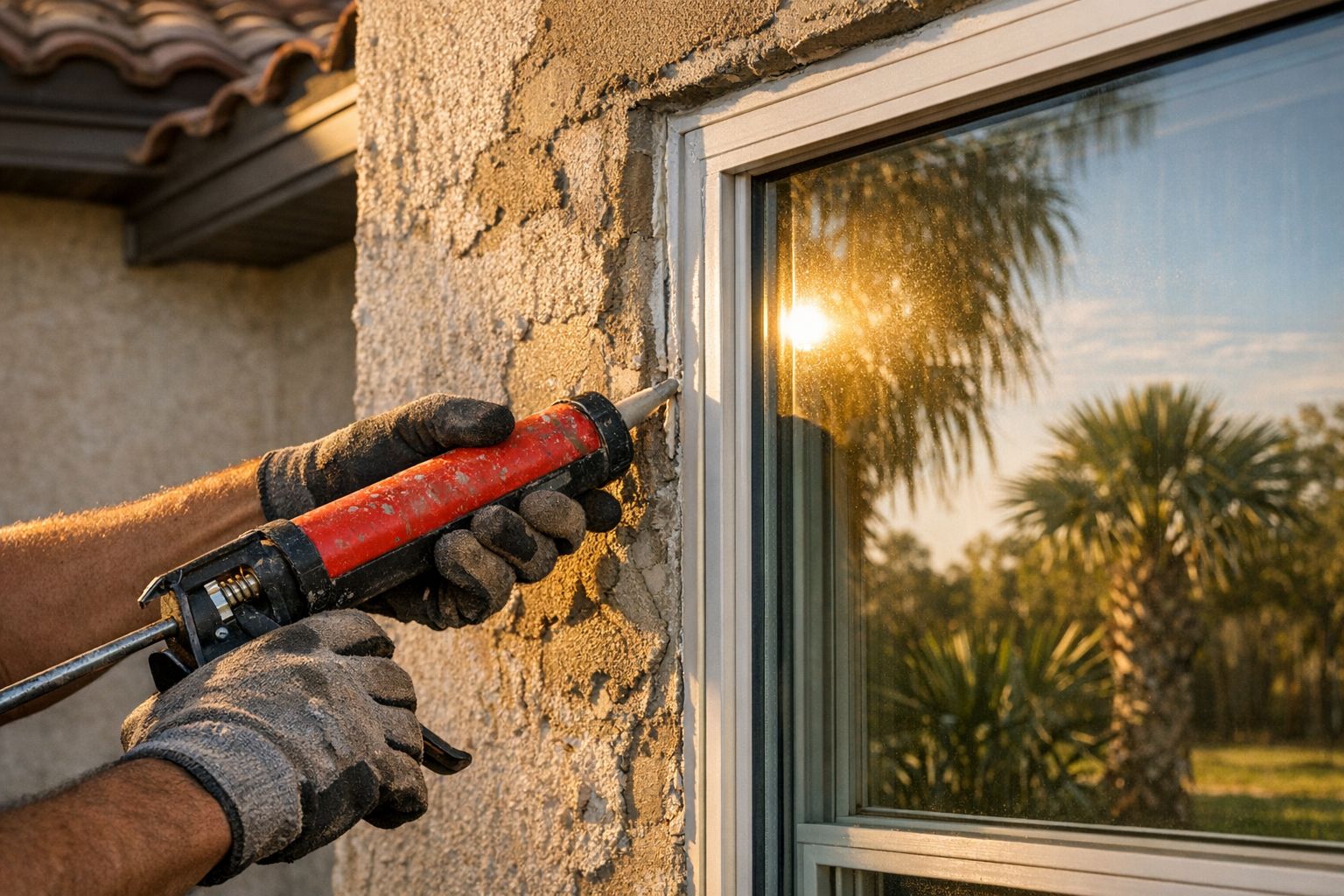
Hurricane season arrives in Spring Hill every June whether your openings are ready or not. Impact windows stay in place year round, holding laminated glass together when debris hits and keeping wind pressure outside your walls. Here is how the glass, frames and anchors actually work, and what they do for you the other ten months.
How Impact Windows Provide Superior Hurricane Protection
Laminated Glass Technology
The heart of an impact window is its laminated glass. Two or more panes are bonded to a tough interlayer, usually polyvinyl butyral, so the assembly behaves as one piece instead of separate sheets. When a roof tile or a broken palm frond strikes at storm speed, the outer pane can craze and crack, but the interlayer grips the fragments and the opening stays sealed. No shards land on your tile or LVP floors, and wind driven rain has nowhere to enter. Large missile testing drives a nine pound length of lumber into the glass, then cycles the unit through thousands of pressure reversals to mimic gusts pushing and pulling on the same opening. Units that clear the toughest version of that protocol carry a Miami-Dade Notice of Acceptance, the strictest approval available in the state.
Reinforced Frame Systems
Glass only performs as well as what holds it. Impact frames use heavier aluminum or reinforced vinyl extrusions with thicker walls, deeper glazing pockets and more attachment points than the single-hung aluminum units builders hung on Spring Hill houses in the 1980s. The extra material lets the frame transfer wind load into the structure rather than flexing until the glass leaves its bite. Hardware matters just as much. Multi-point locks pull a slider or single-hung sash tight against the weatherstrip at several places along its length, so a gust cannot lever one corner open. Sill risers, reinforced meeting rails and stainless fasteners resist the salt air that drifts inland from the Gulf and chews ordinary hardware. Every part of the assembly carries a share of the pressure, which is why manufacturers test and label the window as a complete system rather than certifying the glass alone.
Comprehensive Storm Protection Benefits
Wind Resistance and Structural Integrity
A house resists a hurricane as a closed box. Break one window on the windward side and the pressure that was pushing on the outside of your wall is suddenly inside the room, pressing up on the ceiling and out on the other walls. That internal pressurization is how storms peel asphalt shingle roofs and lift trusses off block walls. Impact windows are rated to hold a specific design pressure in both directions, positive when wind shoves against them and negative when it tries to suck them out of the wall. Keeping the envelope closed keeps the load path intact, so the wind stays a problem for your stucco instead of your roof deck. It is also why partial protection helps less than homeowners expect, since one unprotected opening can undo the work the rest of the house is doing.
Debris Impact Protection
Most window failures in a hurricane are not caused by wind alone. They are caused by something the wind picked up first: a section of gutter, a piece of concrete barrel tile off a neighbor's hip roof, a paver, a length of fence board. At sixty or eighty miles an hour those become projectiles, and standard annealed glass gives way instantly. Laminated impact glass absorbs the hit and keeps the membrane in place even when it is visibly damaged. The benefit compounds. An intact opening stops the sideways rain that follows the debris, and that rain is what soaks drywall, delaminates cabinet boxes and turns a one-window problem into a full interior repair. Homeowners in Hernando and Pasco who have cleaned up after a wind driven rain event usually rate that as the more expensive half of the damage.
Pressure Cycling and Water Resistance
Hurricanes do not apply steady force. Gusts load and unload an opening hundreds of times an hour, and each reversal works at the seals, the fasteners and the glazing bead. Impact units are qualified with a cyclic pressure test for exactly this reason, and they are separately tested for water penetration under simultaneous wind and spray. That second rating is the one most Spring Hill homeowners feel first, because heavy summer squalls arrive long before any named storm does. A properly rated and properly sealed window keeps water out of the wall cavity at the sill, where stucco over concrete block is least forgiving. On slab-on-grade houses there is nowhere for a leak to drain, so anything that gets past the sill ends up in your baseboard and flooring.
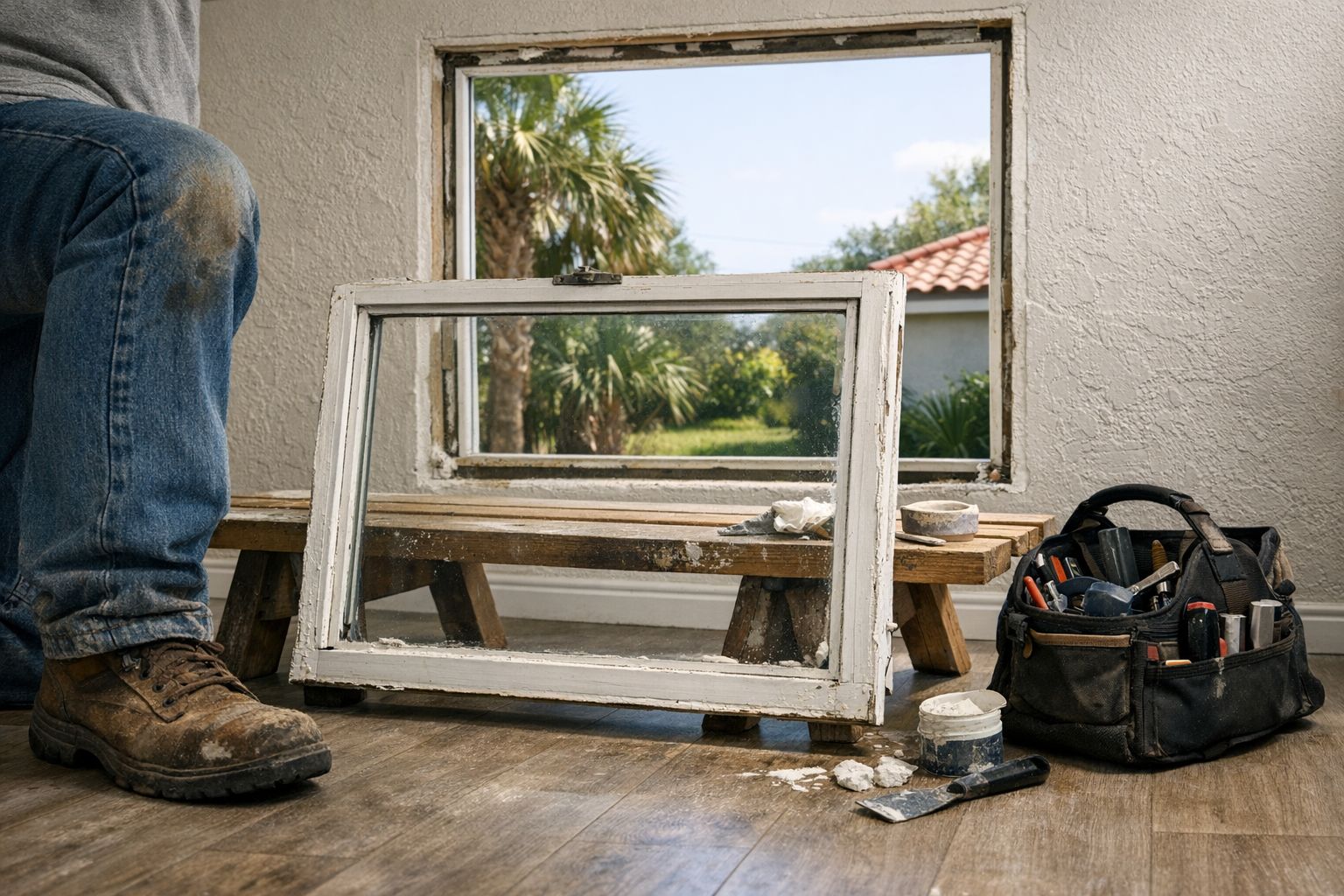
Impact window installation — Spring Hill, FL
Beyond Hurricane Season: Year-Round Benefits
Everyday Security
The same interlayer that stops a flying tile makes a window a poor entry point. Someone swinging a tool at laminated glass gets a spiderweb and a lot of noise, not a hole to climb through, and the multi-point locks resist prying at the sash. Most attempts end when the intruder realizes the opening is not going to open. That matters on rear elevations and lanai sliders, which are the quiet, screened-from-the-street targets on a typical Spring Hill lot with mature palms along the fence line. It also changes what you leave accessible. Homeowners who used to keep bedroom windows latched shut in the heat often go back to using them, because the hardware is substantial and the glass is no longer the weak link.
Noise Reduction
Laminated glass damps sound as a side effect of how it is built. The interlayer converts vibration into a small amount of heat instead of passing it through, which knocks down the mid and high frequencies that carry traffic noise, lawn equipment, pool pumps and the general hum of a neighborhood collector road. Add the tighter compression seals that impact units need in order to hold pressure and the difference is easy to hear the first evening after installation. Rooms facing Cortez Boulevard, Mariner Boulevard or the Suncoast Parkway benefit most. It will not make a house silent, and low frequency sound like a diesel engine still travels through the walls, but the sharp edge comes off everything else.
Cooling Cost and Comfort
Central Florida windows spend most of the year fighting heat gain rather than heat loss. Modern impact units are usually specified with a low-E coating and an insulated glass makeup, which reflects a large share of the solar energy that used to land on your furniture and floors. West and south elevations feel the change most: rooms that were unusable at four in the afternoon become usable, and the air handler stops running long cycles just to fight one bank of picture units. The frame contributes too, through thermal breaks in aluminum or multi-chamber vinyl profiles and through seals that stop the air leakage common in thirty year old single-hung sashes. Lower peak load means the system you already own does less work, which is the practical version of an efficiency upgrade.
Installation Determines Whether Any of It Works
Anchoring and Sealing to Block
A labeled window earns its rating only when it is attached the way the approval document says. For stucco over concrete block, that means the correct fastener type, diameter, embedment and spacing into sound masonry, not into stucco alone and not into a shim stack. Spacing tightens near corners because that is where pressure peaks. Sealing is the other half of the job. The opening gets prepared, flashed and sealed so water reaching the sill drains back out instead of sitting against the block, and the perimeter is backer rodded and caulked to allow movement without splitting. Crews working on slab-on-grade homes also have to manage interior finishes carefully, since there is no space below the floor to hide a mistake and any water that gets in shows up in the flooring.
Permits, Inspection and Documentation
Impact window work in Hernando County is permitted work, and that is a feature rather than an obstacle. The permit application pairs each opening with a specific approved product and shows that the unit's design pressure meets or exceeds what the code requires for the house. An inspector then verifies the installation against that approval. What you keep afterward is the paperwork: the approval number, the labels and the closed permit. Insurers ask for it when they credit opening protection on a wind mitigation inspection, and buyers and their inspectors ask for it at resale. An undocumented install can force a future owner to prove compliance the hard way, or to replace units that were probably fine to begin with.
Making the Investment in Hurricane Protection
What Drives the Number
Pricing tracks the openings, not the square footage of the house. Size and shape matter first, since a wide slider or a fixed picture unit needs more glass and more structure than a bedroom single-hung. Then comes the required design pressure for your address, the glass package you choose, the frame material and how much repair the existing openings need once the old units come out. Houses that still have their original aluminum frames sometimes need sill or buck work that a newer home does not. Phasing the project is normal. Many homeowners protect the largest and most exposed openings first, then finish the remaining elevations later, and a clear proposal prices the work so either path is easy to compare.
Getting a Measured Estimate
An accurate quote comes from measuring, not from a phone conversation. Every opening gets measured, the existing frame and wall condition gets checked, and the exposure of each elevation gets noted, because a wall facing open ground and a wall shielded by the neighboring house do not carry the same load. From there you should see which product is proposed for each opening, the design pressure it carries and what the installation includes. Call (352) 309-3256 to set up a free consultation and estimate for your Spring Hill home. You will get a written scope tied to specific approved products, so you can compare proposals on the basis of what is actually being installed.
Ready for Impact Windows?
Get a free on-site estimate from Spring Hill's impact window specialists. Permitted and inspected.
📞 Call (352) 309-3256