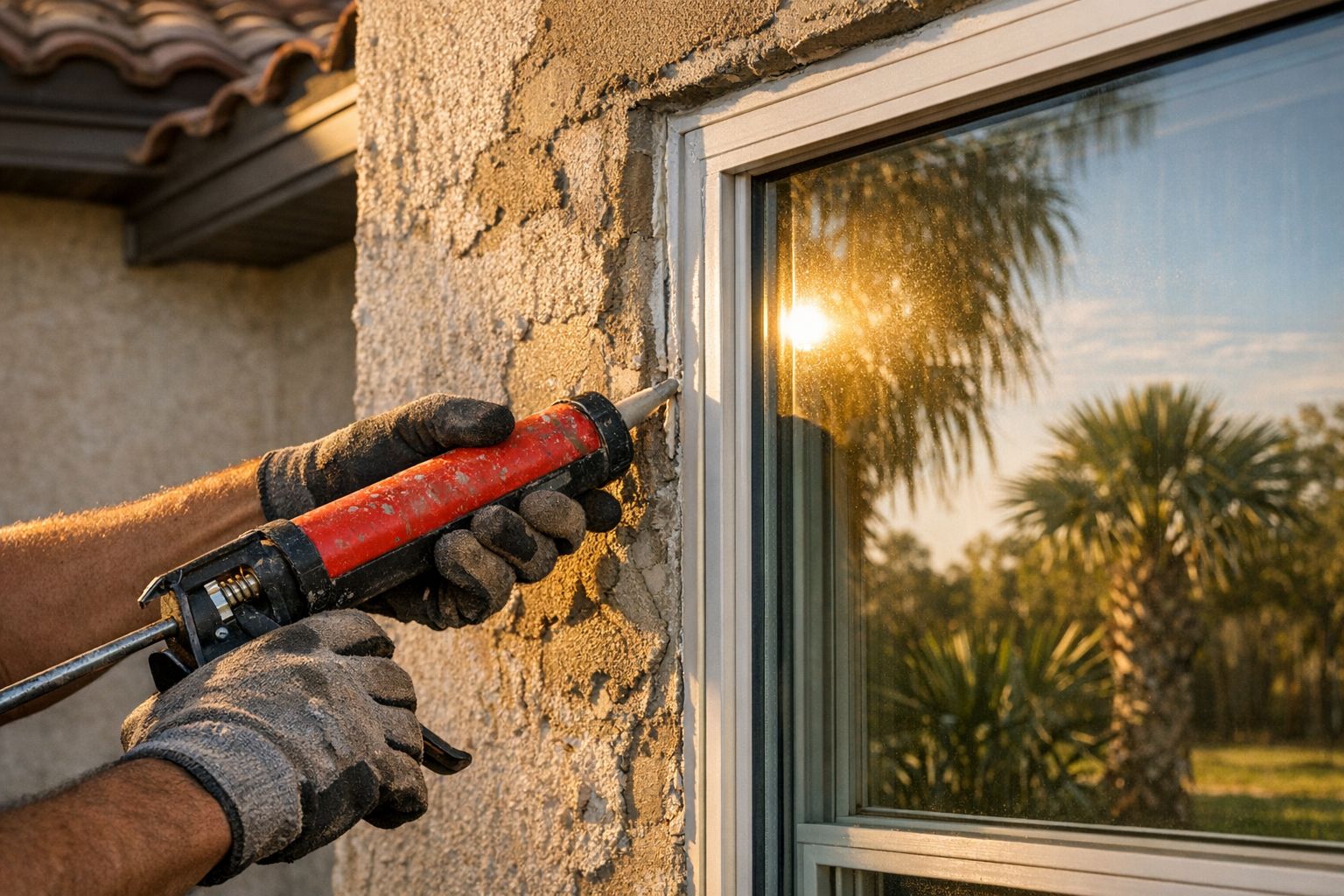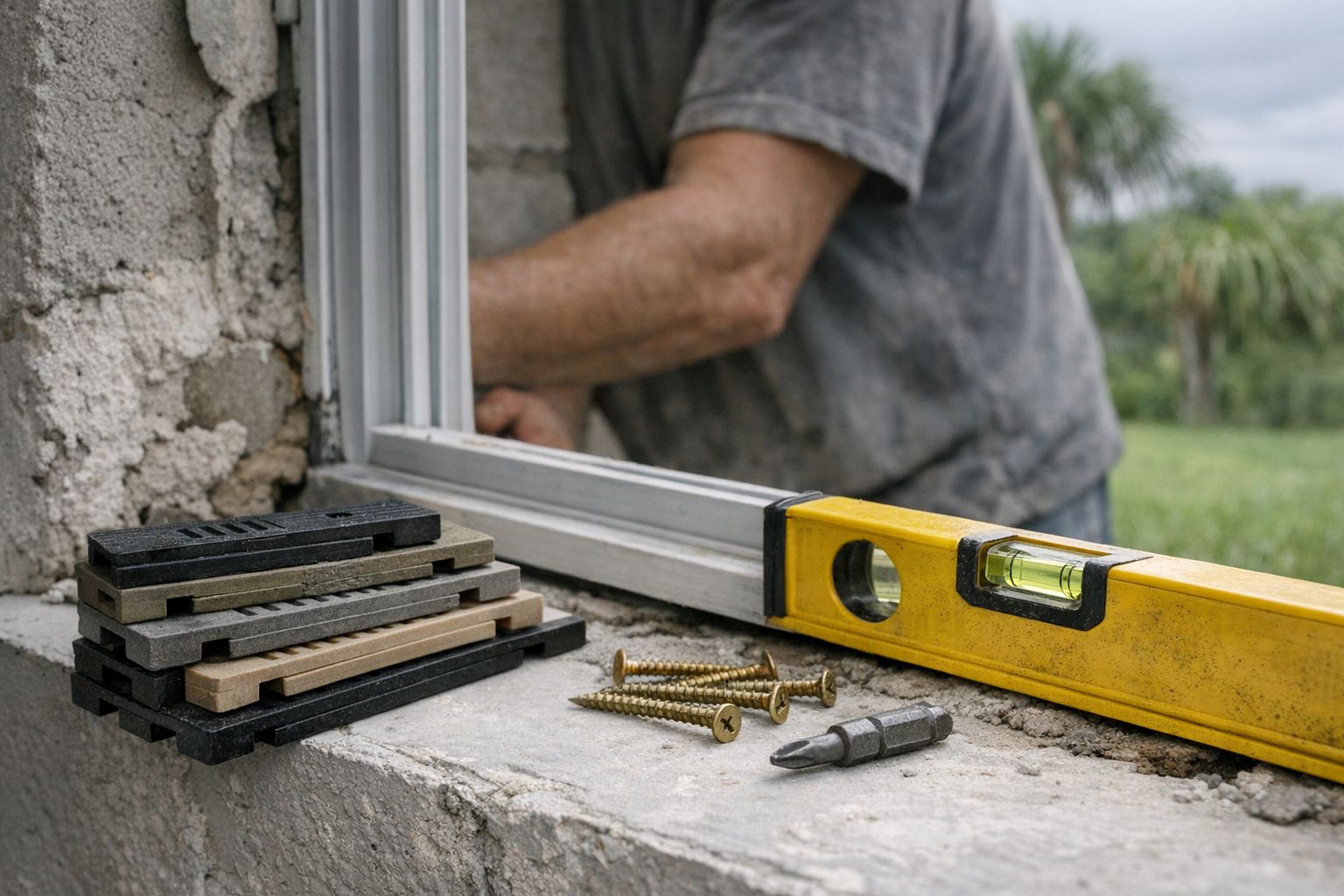
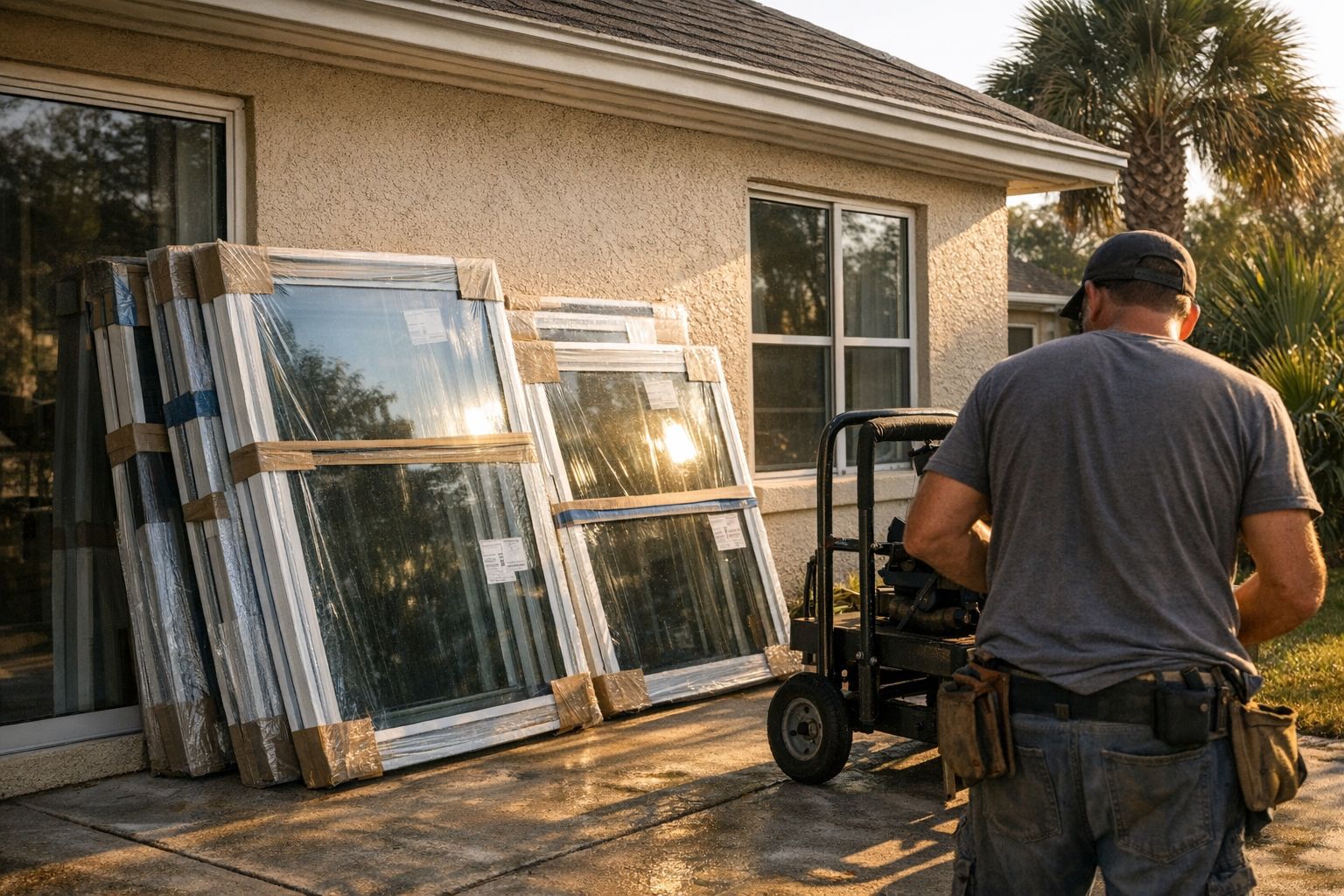
Shutters or impact glass? Both satisfy the Florida Building Code, and one of them costs noticeably less to buy. The differences show up in what happens the week a storm is named, what your insurer credits, and what the house is like to live in for the other fifty weeks. Here is the comparison, trade-off by trade-off.
Up-Front Cost and What You Get for It
Where Shutters Genuinely Win
On price alone shutters win, and it is not close. Covering a typical three bedroom Spring Hill house with accordion or roll-down shutters generally lands well under the cost of replacing the same openings with impact units, and corrugated metal or polycarbonate storm panels sit lower still. The reason is simple: a shutter is a guard bolted to the outside of an opening you already own, while an impact window replaces the opening itself, glass, frame, hardware and all. If the existing single-hung aluminum windows still operate, still seal and still keep water out, a shutter package buys code-level protection without paying for windows nobody needed to replace. For a household on a fixed budget that wants every opening covered this season rather than half of them, that is a defensible call.
Where the Gap Narrows
The comparison shifts when the existing windows are already at the end of their service life. Original 1980s aluminum frames with failed seals, chalky finishes and sashes that need a shoulder to move are going to be replaced eventually, and once replacement is on the table the impact upgrade costs only the difference rather than the whole amount. Shutters also carry costs that never appear on the quote: storage space in a garage that is already full, panels and hardware to keep track of, tracks and fasteners that need attention in salt air, and motors on roll-downs that eventually want service. Neither option is free after installation. One of them, though, asks something of you every time a system gets a name.
Storm Day: Deployment and Reliability
The Clock Before a Named Storm
This is the practical difference most people underestimate. Impact windows are deployed the moment they are installed, so there is nothing to do when a cone appears over the Gulf. Accordion and roll-down shutters close in a minute or two per opening, which is quick, but somebody still has to walk the house, unlock every track and pull every panel. Removable metal or polycarbonate panels are a different job entirely. Hauling, sorting, lifting and bolting panels over a dozen openings is a half day of work in July heat, usually on the same afternoon you are buying water, fueling the truck and dragging lanai furniture inside. Forecast tracks shift. Anything that depends on having enough warning, enough help and enough daylight carries a failure mode the window does not.
Who Is Actually Going to Deploy Them
Be honest about the household. Panels weigh enough that handling them overhead from a ladder is not reasonable for everyone, and plenty of Hernando County homes belong to people who cannot safely do it or who travel during hurricane season. Seasonal residents who head out of state for part of the year face the worst version: a system organizes while the house sits empty and uncovered, with nobody nearby to close anything. Accordions and roll-downs help here, and motorized roll-downs with a remote help more. Even so, every deployable product assumes a person or a working motor at the right moment. Glass that is always in place does not care whether anyone is home, which is why part-time owners and older homeowners tend to weigh that point heavily.
When Storms Arrive Back to Back
One season can bring two or three threats to the same stretch of coast. Each threat costs a full cycle with panels: put them up, wait it out, take them down, restack them, then do it again when the next system organizes. Living behind closed coverings for several days is its own experience, because the house goes dark and interior lighting runs around the clock. Some owners get fatigued by the third round and skip deployment for a storm the forecast says will pass to the west, which is exactly the wrong moment to guess. Fixed glazing removes that decision. That said, a shuttered house that actually gets shuttered performs, and a well-maintained accordion closed on time satisfies the same code requirement the glass does.
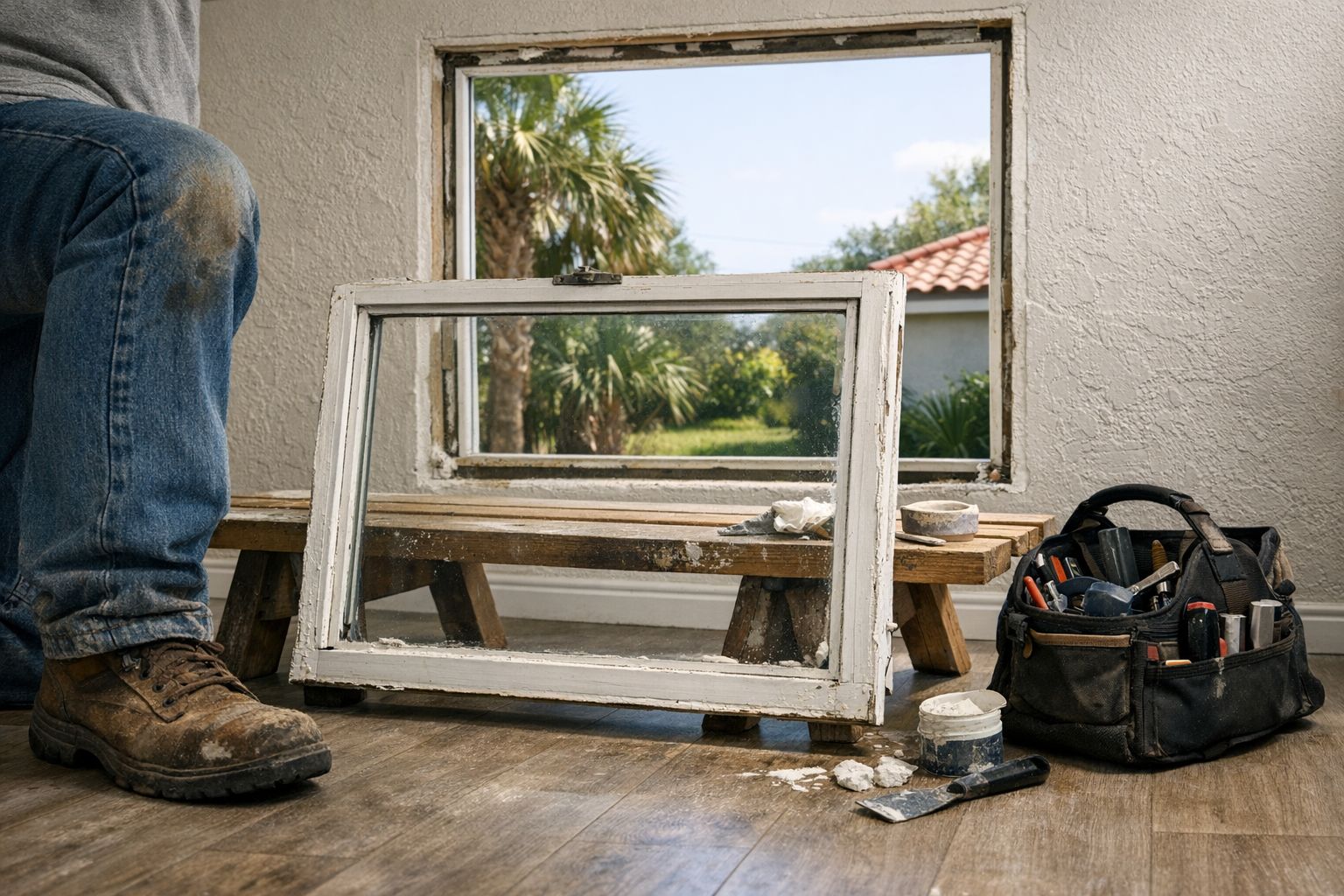
Impact window installation — Spring Hill, FL
Code Compliance and Insurance
Two Legitimate Compliance Paths
The Florida Building Code does not play favorites. In a wind-borne debris region, glazed openings must either be impact resistant themselves or be protected by an impact resistant covering, and both routes call for tested, approved assemblies rated for the design pressure at your address. A shutter is therefore not a lesser choice in the eyes of the code; it is one of the two named ways to comply. What counts in both cases is documentation and attachment. The approval document specifies fastener type, embedment into concrete block and spacing, and permitting and inspection apply to a shutter package the same way they apply to a window replacement. Plywood cut in the driveway is not a compliance path, however much better it is than nothing at the last minute.
How Insurers Treat Each One
Florida wind mitigation inspections generally credit opening protection when every glazed opening on the home is protected to the required standard, and approved shutters and approved impact windows can both satisfy that. Partial coverage is where people get surprised. Cover nine openings, leave the bathroom awning unit bare, and the opening protection credit can disappear entirely no matter which product covers the other nine. Carriers differ in how they weigh the two options and in what documentation they accept, so the practical step is to get the requirements from your own carrier or inspector before you choose. Bring the approval numbers to the inspection either way, because verified protection is what earns the credit, not a sales brochure.
Daily Livability
Light, Sound and Everyday Use
Outside of storms this is where the two options diverge most. Impact windows are invisible in daily life. Views stay clear, the glass can be specified with a low-E coating that cuts the heat pouring into west-facing rooms, and the laminated makeup quiets road noise as a side benefit. Shutters spend most of the year parked. Accordions stack into columns at the jambs, roll-downs sit in a housing above the opening, and both are visible from inside and out. Tracks collect grit and want rinsing, especially on homes close enough to the Gulf to catch salt air. None of that is a dealbreaker, but it is a daily-versus-occasional trade: glass improves the house all year, while a covering earns its keep a few days a year.
Odd-Shaped Openings and Awkward Retrofits
Here shutters hold a real advantage worth stating plainly. Arched transoms, half-rounds, hexagons, tall narrow sidelights and the wide screened lanai openings common on Florida homes are expensive or slow to solve with custom impact glass, and some shapes have very few approved options at all. A covering can be fabricated for an odd opening at a fraction of the cost of a custom unit, and roll-down or track systems span widths no single window can handle. Existing openings that are out of square, or that sit in walls with questionable buck conditions, also lend themselves to a surface-mounted guard. Mixing products is normal and permitted, and plenty of homes end up with impact units on the standard openings and coverings on the two or three shapes that refuse to cooperate.
Resale and How to Decide
What Buyers and Appraisers Notice
In listings around Hernando and Pasco, impact glass tends to be named in the description while shutters get mentioned in passing. Buyers read impact windows as a finished upgrade with no homework attached, and they can judge the condition of the units during a showing. A shutter package reads as a system the new owner has to learn, store and deploy, and its condition is harder to assess because the panels are usually stacked in the garage. That perception gap is real, though it should not be overstated. A documented, code-compliant covering on a home with sound windows is a genuine selling point, and it will do more for a buyer's insurance quote than unprotected openings behind a new kitchen.
A Practical Way to Choose
Start with the condition of what you already have. If the windows are sound and the goal is protection at the lowest cost this season, price coverings first, and price them for every glazed opening so the compliance and insurance picture is complete. If the windows are already failing, or nobody in the household can reliably handle panels, or the house sits empty for part of the year, the impact route usually makes more sense once you account for the replacement you were going to do anyway. Either way, insist on approved products, a permit and an inspection. To have your openings walked, measured and priced both ways, call (352) 309-3256.
Ready for Impact Windows?
Get a free on-site estimate from Spring Hill's impact window specialists. Permitted and inspected.
📞 Call (352) 309-3256